A short history of the Icelandic wool sweater
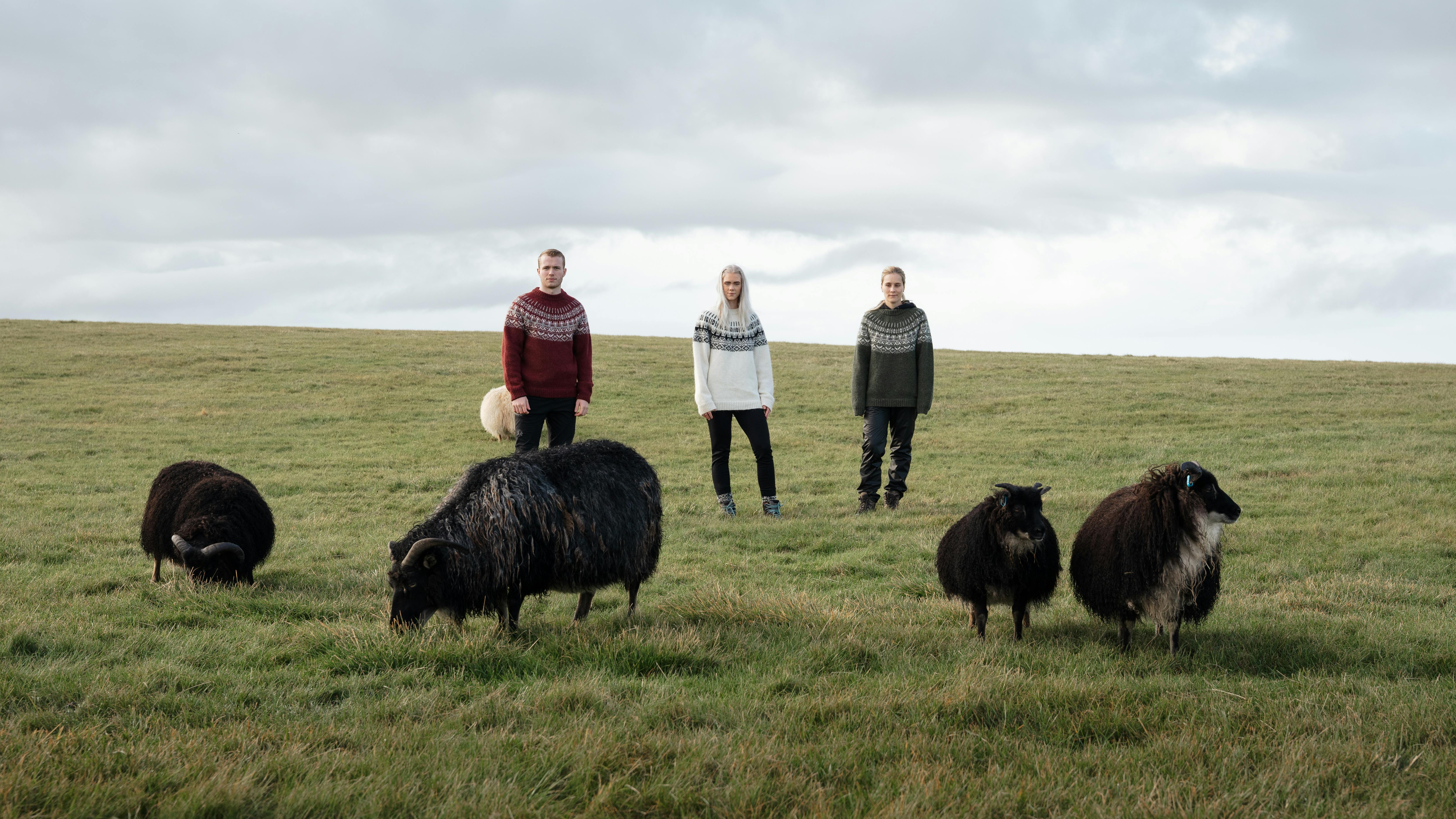
The Icelandic sweater is as much a part of popular fashion in Iceland as jeans and hiking shoes. Known as lopapeysa, from the Icelandic words lopi for wool and peysa for sweater, the yarn of this iconic garment dates back to the earliest days of settlement in Iceland when pioneers came from Norway and brought sheep with them.
The sweater pattern that we know as the classic Icelandic sweater is a more recent development in Icelandic culture. The history of that Icelandic wool sweater is one of homegrown comfort and Scandinavian cultural exchange.
The first lopapeysa sweaters
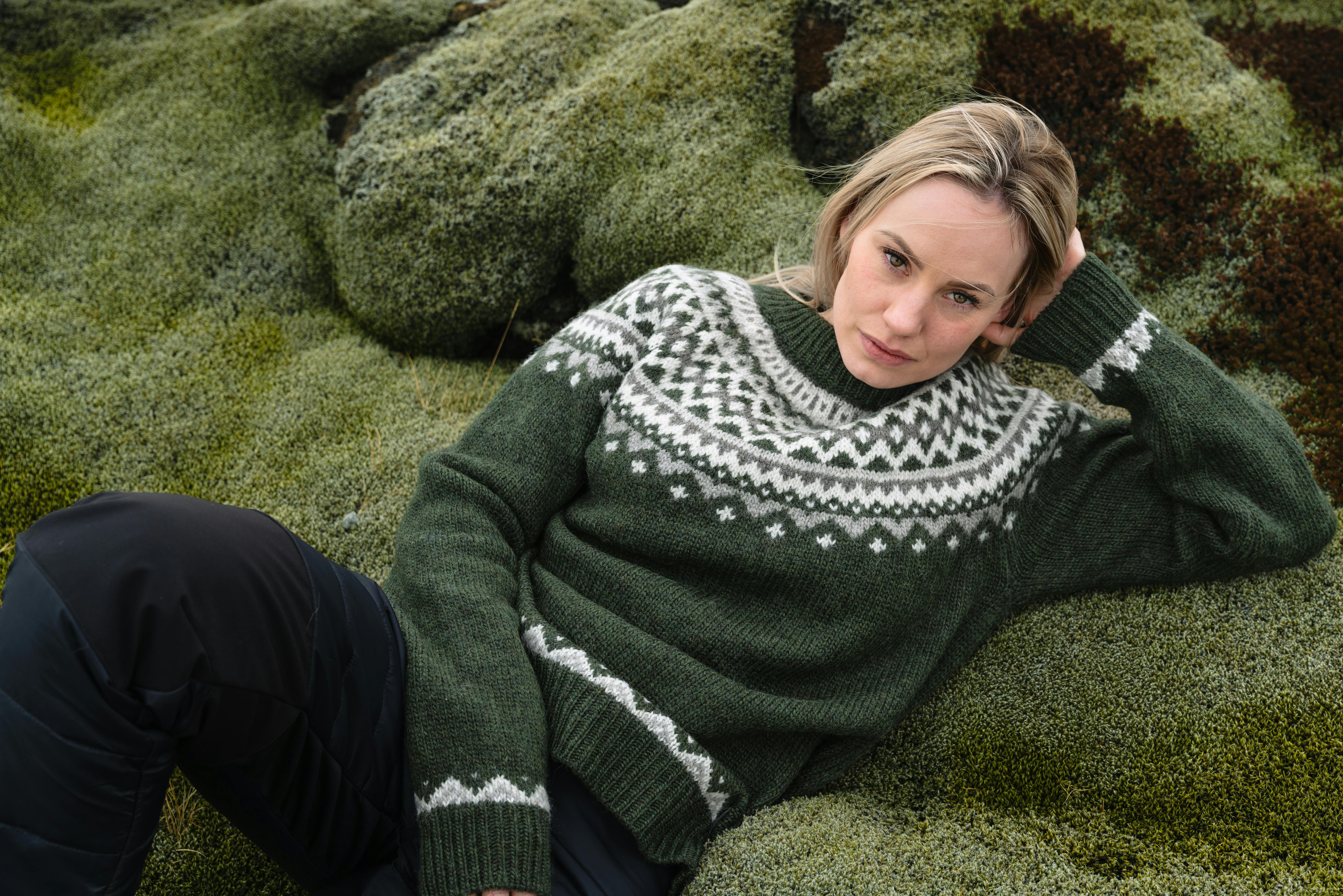
Although wool production has been a part of Icelandic living since the first settlers, the iconic round-yoke sweater is relatively new in Icelandic culture. Icelandic wool, known as lopi, is unique for its weather-resistant properties including natural moisture and bacteria resistance. Coming from Iceland’s unique breed of sheep, the wool is composed of two layers:
One that makes it warm
And one that makes it water resistant
These two layers give Icelandic sheep a natural protection from Iceland’s harsh weather conditions. (You can read more about the unique properties of Icelandic wool here.) The production process that turns the sheep’s wool into a yarn for knitting allows the wool to retain these protective properties while converting the fibers into something beautiful and functional for human use. Modern technologies make it possible for the wool to be produced in a variety of thicknesses, allowing for varying density in knitted goods, including for use in Icelandic wool insulation filling.
The traditional lopapeysa and Scandinavian patterns
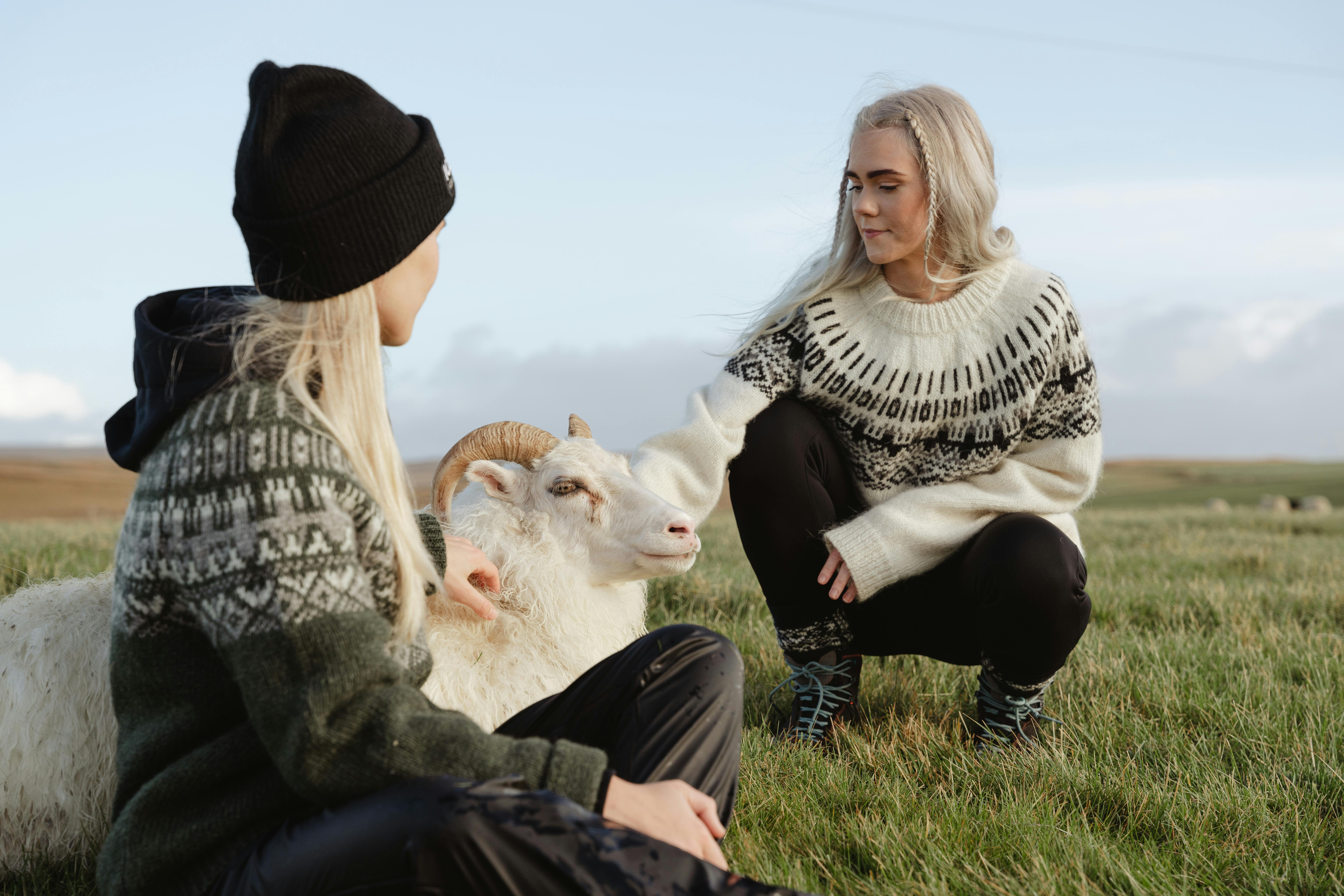
The iconic pattern of the Icelandic sweater in fact came to Iceland from other parts of Scandinavia. The original round-yoke sweater pattern appeared in the 1932 knitting book Strikkeopskrifter by Norwegian designer Annichen Sibbern Bøhn. The design, called “Eskimo,” was inspired by the national costume of Greenlandic women. In later decades, the sweater pattern was adopted by other Scandinavian countries and presented with modified color schemes. It appeared in Iceland in the December 1956 issue of Melkorka magazine with varied colors; the pattern was at this time called Grænlenzk peysa, meaning Greenlandic sweater. It's interesting to note that in other Scandinavian countries—Sweden and Denmark—sweaters of this design were referred to as “Icelandic sweaters.” The development of this knitting design is an example of the cultural transfer that is typical of Scandinavia.
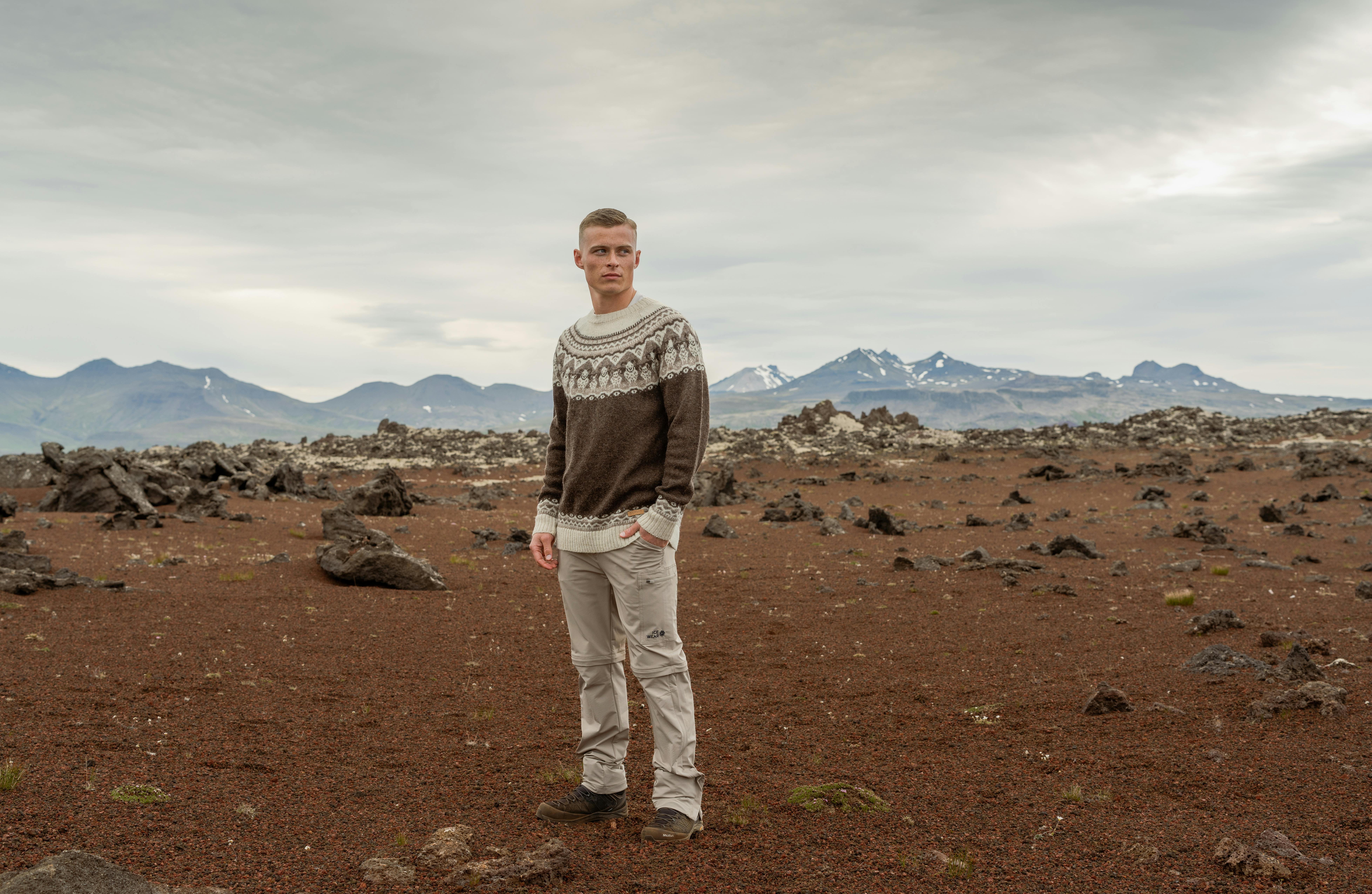
The striking interplay of colors makes the Icelandic sweater a beautiful signature piece in any cool-weather wardrobe, projecting both a contemporary casual style as well as a connection to the longstanding craft of knitting. It’s the combination of homegrown material and culturally shared design that makes for a true Icelandic sweater. That’s why, if you are choosing a piece for your wardrobe, you want to be sure that not only does it have Icelandic design, but that the material is 100% Icelandic wool. Icewear’s knitwear selection includes classic sweaters made from 100% Icelandic wool, as well as Norwegian sweaters in other fiber combinations.
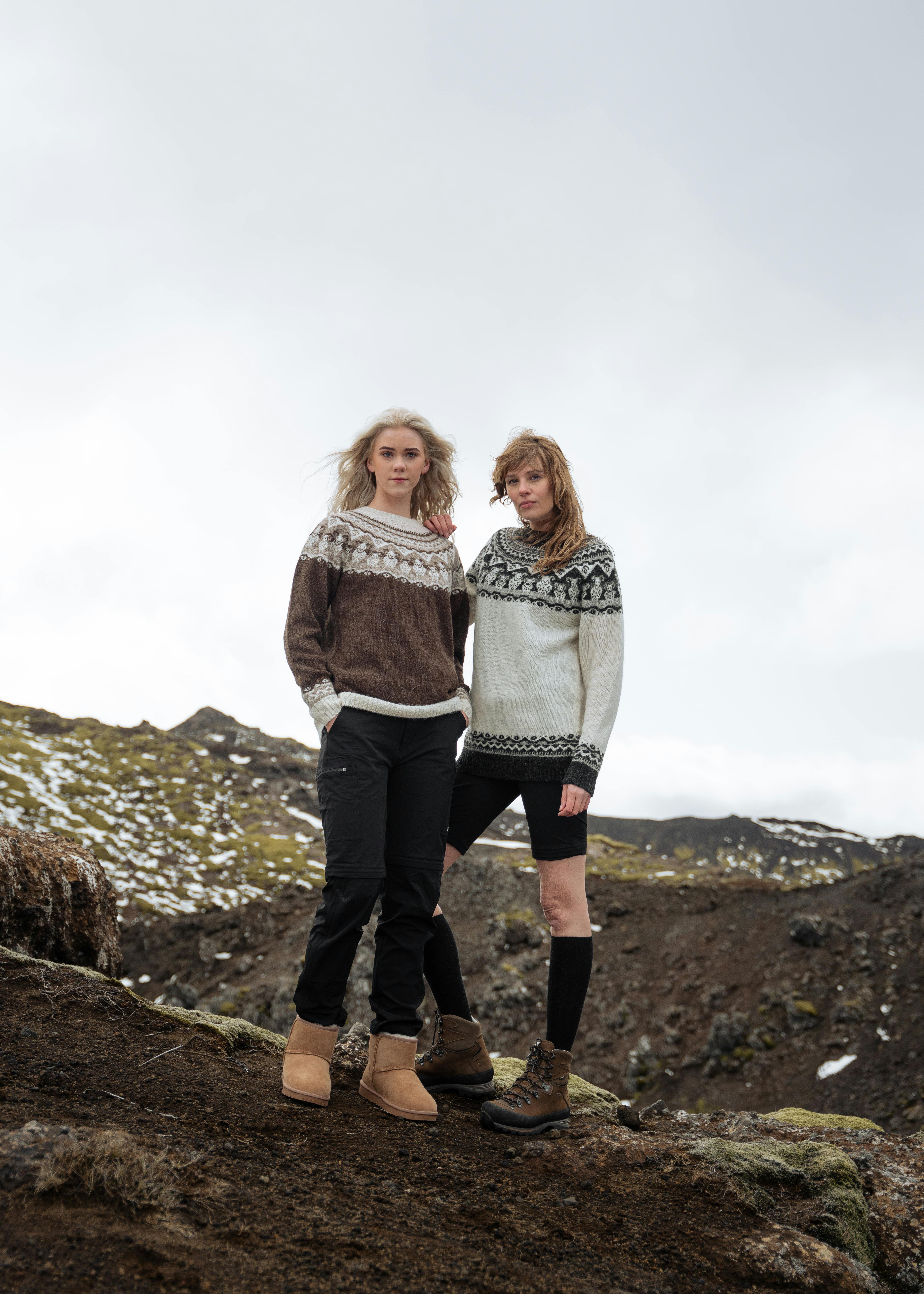
The distinctive design of the Icelandic sweater might have a history that reaches beyond the island, but Icelanders added the qualities that make it unique. The warm and weather-resistant properties of the wool from Iceland’s own breed of sheep give the garment protective functionality, while the creative color combinations add character and charm. The resulting aesthetic that is visually appealing and also warm and resilient.
More blog posts

December 2025
Icewear Nominated as One of Iceland’s Leading Brands
Recognition from brandr highlights Icewear’s strategic brand approach celebrating Icelandic identity and product excellence.
Read more
January 2025
Iceland population and the celebration of Bóndadagur
The Icelandic holiday—Bóndadagur is a day devoted to celebrate and pamper your loving spouse. The traditions around this holiday have certainly changed since Norse settlers arrived to the country.
Read more
January 2025
Winter Workout Essentials
In the northern hemisphere, the new year takes place in winter which means that when you start following your resolutions it will be in cold weather. Because of the weather, your body will react differently to how it would during warmer months.
Read more