Sizes
Take the guesswork out of sizing
Finding the perfect fit online shouldn’t feel like an adventure of its own. Because Icewear garments are crafted for durability and designed to last, ensuring they perform at their best for years to come starts with finding the right fit. That’s why, in addition to the size charts on each product page, the sizing guide below removes the guesswork. It serves as a helpful resource for measuring and choosing the ideal fit for all Icewear clothing.
Tips for a great fit
To get the most accurate results, keep in mind that the measurements in the size charts refer to the garment itself while laid flat. When measuring your body, be sure to account for the additional 'breathing room' you prefer for your desired fit.
Another tip is also to find similar item at home that already fits perfectly. Lay it flat on a table, take the measurements, and compare them to the Icewear size guide on how to measure.
It’s also good to consider that different fabrics and styles have their own unique character, which means that slight variations can sometimes occur during the crafting process. At the same time, it’s helpful to consider how a piece is intended to feel; for instance, a snug base layer is designed to sit much closer to the body than a roomy, protective parka
Lastly, consider how snug you are used to wear your clothing, and you could option for loose, regular and tight fitted designs.
Different fitting styles and sizes
At Icewear, clothing is designed around a layering system so your gear can work together in any weather. Read more about how to layer on the Icewear blog.
The Slim Fit sits close to the body and is the perfect fit for clothing used for high-energy activities like running or fast-paced hiking and base layers that should sit close to the body.
For a traditional, balanced cut, the Regular Fit works best as a mid-layer, offering enough room for a thermal underneath while fitting comfortably under a winter coat.
Finally, the Relaxed Fit provides a generous, roomy silhouette for those who prefer a baggy feel or want to fit layers underneath.
Comfort size
Icewear also offers a Comfort Size collection which is thoughtfully designed for those who find standard outdoor sizing a bit restrictive. Rather than just “sizing up”, Icewear has designed a collection such as Már and Mía with generous tailoring and extra room around the torso and midsection.
Comfort size
Jackets and Tops
At Icewear, jackets and tops are crafted to be your primary defense against the elements. When shopping for tops it’s good to consider that well-fitted top should allow for a full range of motion while maintaining the thermal integrity of your outfit.
Since Icewear jackets are designed for the outdoors, think about what will be worn underneath. For a heavy winter parka intended to go over thick wool sweaters, a slightly roomier fit may be preferable compared to a lightweight shell.
1. Chest Width
Measure straight across the chest, starting at the underarm and moving from side to side.
2. Sleeve Length
To get the right sleeve coverage, first identify the sleeve type. If there is no shoulder seam (Raglan), start your measurement at the neck. If there is a seam, start at the edge of the shoulder. This small detail makes a big difference in how the garment feels.
3. Total Length
Measure from the highest point of the shoulder (near the collar) straight down to the bottom hem.
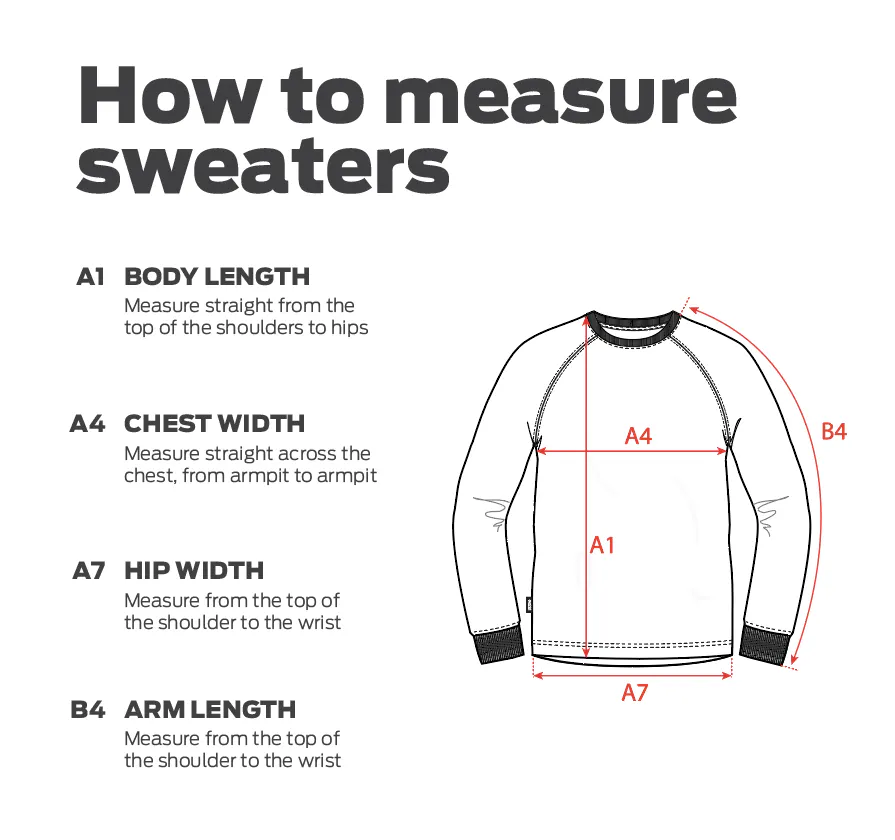
Measuring Wool Sweaters
Wool sweaters are at the heart of the Icewear collection. Because wool is a natural fiber consider how you want the sweater to sit when taking measurements. If a more relaxed, traditional “Icelandic look” is preferred, some shoppers choose one size up. Also, keep in mind that a well-fitted wool sweater will naturally retain its shape best when stored folded rather than on a hanger.
To keep your sweater looking and fitting like new over time, it’s important to follow the Icewear Washing & Care Instructions. Proper care helps preserve the wool’s softness and shape, ensuring your sweater maintains its size after every wash and avoids unwanted shrinking.
Measuring Bottoms
Finding the right pair of bottoms is all about comfort on the move. When choosing a size, think about the adventures ahead. If those plans include colder weather, a little extra room for a base layer underneath can make all the difference. Conversely, if you are shopping for the base layer itself, it should be snug and sit close to the skin to move with you and retain warmth effectively.
To find the best fit for trousers, leggings, or shorts, Icewear recommends measuring yourself and keep the above points in mind. Alternatively, you can lay a well-fitting garment you already own flat and take the measurements described below.
Difference in sizing EU/UK/US
Icewear wants to make sure that you find the right fit no matter where you are shopping from and as sizing standards can vary slightly between the UK, Europe, and the USA, it’s helpful to check out the comparison table when choosing sizes. A UK size 10 in clothing is quite different from a US size 10 (which is actually a UK 14!). That’s why taking a second look at the table below prevents that disappointing moment of realizing a garment is much smaller or larger than expected.
| Column A | Column B | New Column |
|---|---|---|
| Size (S-M-L) | USA | UK |
| S | 2 | 6 |
| S | 4 | 8 |
| M | 6 | 10 |
| M | 8 | 12 |
| L | 10 | 14 |
| L | 12 | 16 |
| XL | 14 | 18 |
| XL | 16 | 20 |
How to measure socks and shoes
Keeping your feet comfortable is the secret to a great day outdoors. Because Icewear has a selection of a variety of high-quality brands, including Asolo and Salewa, along the Icewear line, it’s important to keep in mind that sizing standards can vary slightly depending on the brand, gender, and age group.
When choosing footwear for hiking or cold weather, remember to consider the thickness of the socks. If planning to wear heavy wool socks for extra warmth, a slightly roomier size can help keep everything feeling breathable and comfortable.
The most reliable way to find the right fit for footwear is to follow the simple steps below:
Socks
To get the length right, measure in a straight line from the tip of the toe to the mid-point of the ankle. Since wool socks often have a bit of natural stretch, this measurement helps ensure they sit snugly without bunching.
Shoes
To find your ideal size, measure from the tip of your toe to the back of your heel, leaving a small margin for comfort.
A quick tip on difference in shoe sizing comparisons:
It’s good to keep in mind that UK and US shoe sizes are not the same. For example, a UK men size 10 is typically one full size smaller than a US size 10. To ensure you get the perfect fit for your next adventure, it is recommended to use Icewear’s EU size as your primary guide and double-check the conversion table before ordering.
| Column A | Column B | New Column | New Column 1 | New Column 2 |
|---|---|---|---|---|
| EU Size | UK Size (Men) | UK Size (Women) | US Size (Men) | US Size (Women) |
| 36 | 3.5 | 3 | 4 | 5 |
| 37 | 4 | 4 | 5 | 6 |
| 38 | 5 | 5 | 6 | 7 |
| 39 | 6 | 6 | 7 | 8 |
| 40 | 6.5 | 7 | 7.5 | 9 |
| 41 | 7 | 8 | 8.5 | 10 |
| 42 | 8 | 9 | 9 | 11 |
| 43 | 9 | 10 | 10 | 12 |
| 44 | 9.5 | — | 10.5 | — |
| 45 | 10.5 | — | 11.5 | — |
| 46 | 11 | — | 12 |
How to get the right accessories fit
Small details make a big difference when it comes to staying comfortable. To make sure these essentials feel just right, use these simple steps to find the best fit for your gear.
Beanies and Caps
· Beanies: Measure the width straight across the bottom edge. For the height, measure at the center from the top down to the bottom.
· Caps: Measure the total circumference along the inner seam of the head for the most accurate fit.
Neck Gaiters
· Width: Measure straight across the top seamline from side to side.
· Front Height: Measure at the center front, straight from the top edge down to the bottom.
Gloves
· Length: Measure in a straight line from the tip of the second finger (middle finger) down to the bottom hem.
· Knuckle Width: Measure straight across the knuckles from side to side (from the thumb) to ensure enough room for comfortable movement.
Ladies' swimwear and underwear
Tops
• Bra Cup Width: Measure straight across the bottom of one cup, from the outer seamline to the inner seamline.
• Chest: Measure straight across the band directly below the cups, from one side to the other.
Bottoms
• Waist: Measure straight across the very top of the waistband from side to side.
Body- and swimsuits
• Central Front to Crotch: Measure in a straight line from the center point of the collar down to the crotch seam.
• Armhole: Measure the straight distance from the top to the bottom of the armhole opening.
• Waist: Measure straight across the middle of the bodysuit from side to side.
Men’s swim- and underwear
To find the best fit for men’s swim-and underwear, lay a similar well-fitting garment flat and take the following measurements:
· Waist: Measure straight across the very top of the waistband from side to side.
· Length: Measure on the side of the seam, from top of the waistband to leg opening seam.
Children’s sizing guide (UK/US/EU)
When shopping for the little adventurers in your life, it’s helpful to know that sizing systems work a bit differently across the globe. While UK and US sizes are usually based on age (years), EU sizes are based on the child's height in centimeters (cm), which is the sizing Icewear displays.
Because children grow at their own unique pace, Icewear recommends measuring your child’s height first. A child who is 128cm tall will generally fit an EU size of 128, regardless of their age!
If your child is in between sizes or right on the edge of a height measurement, Icewear recommends choosing the next size. This ensures they have plenty of wiggle room for active play and helps their favorite Icewear gear last just a little bit longer through those inevitable growth spurts.
| Column A | Column B | New Column |
|---|---|---|
| Height (cm) | EU Size | UK/US Size (Age) |
| 92 cm | 92 | 1.5–2 Years |
| 98 cm | 98 | 2–3 Years |
| 104 cm | 104 | 3–4 Years |
| 110 cm | 110 | 4–5 Years |
| 116 cm | 116 | 5–6 Years |
| 128 cm | 128 | 7–8 Years |
| 140 cm | 140 | 9–10 Years |
| 152 cm | 152 | 11–12 Years |
| 164 cm | 164 | 13–14 Years |
Children socks
To keep your little explorers’ feet comfortable, Icewear lists socks in EU sizes. Since these can differ from other regions, the conversion chart provided below helps you find the right USA or UK equivalent.
| Column A | Column B | New Column |
|---|---|---|
| EURO young | USA young | UK young |
| 25-28 | 8.5-11 | 7.5-10 |
| 29-32 | 11.5-1 | 10.5-13 |
| 30-34 | 12.5-3 | 11.5-2 |
| 33-35 | 1.5-3.5 | 13.5-2.5 |
Children's gloves and beanies
When it comes to accessories such as beanies and gloves, Icewear displays children’s age but since age is only a rough estimate, it’s recommended to measure as shown in the diagrams.
To get the correct size when shopping for children’s gloves simply wrap a soft measuring tape around the palm of their hand at the widest point, just below the knuckles, excluding the thumb.
If your child is right at the end of a measurement (for example, exactly 14 cm), Icewear recommends sizing up to the 5-8 Years bracket to ensure they can move their fingers freely while allowing for better heat retention.
Children's hat sizes
To ensure your child’s beanie or hat stays snugly in place during their outdoor adventures, it’s recommended to measure their head circumference. The measurement is taken by wrapping a soft measuring tape around the head, starting approximately 1cm above the eyebrows and ears, across the widest part of the back of the head (the occipital bone).
Still unsure about your size?
We’re here to help! If you’re ever in doubt or between sizes, you can get in touch without our expert team via our support pages. The team will be more than happy to help you find your perfect fit for your new Icewear apparel.